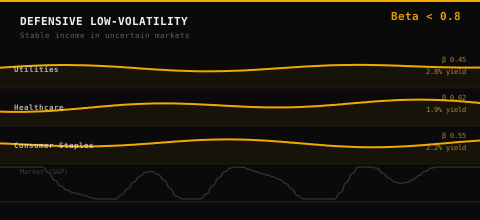
Stable income in uncertain markets
Defensive investing is the practice of building a portfolio that can weather economic downturns and market volatility without catastrophic losses. The three sectors targeted here — Utilities, Healthcare, and Consumer Staples — have historically shown the lowest correlation to broad market swings, because their underlying demand is largely non-discretionary. People still pay their electricity bills, fill prescriptions, and buy groceries regardless of what the S&P 500 is doing.
The beta cap below 0.8 ensures you're selecting the calmer names within these already calm sectors. The dividend yield floor of 1.5% provides a minimum income cushion, while the payout ratio cap below 60% ensures dividends are being paid from genuine earnings rather than stretched balance sheets. The short interest cap below 5% filters out names where institutional investors are actively betting against the company — an important signal in defensive holdings where you expect stability, not controversy.
This preset is particularly useful as a portfolio hedge during periods of elevated macroeconomic uncertainty, rising interest rate environments, or whenever broader equity markets show signs of stress. It draws on the foundational work of Ang et al. (2006) on the low-volatility anomaly and Novy-Marx (2013) on defensive equity characteristics.
Screening Criteria
| Parameter | Condition |
|---|---|
| GIC Sector | Utilities, Healthcare, or Consumer Staples |
| Dividend Yield | > 1.5% |
| Beta | > 0 and < 0.8 |
| Return on Equity (TTM) | > 10% |
| Payout Ratio | > 0 and < 60% |
| Short Interest (% Float) | < 5% |
Why sector matters here
The sector filter is the backbone of this preset. Applying low-beta and dividend filters to the entire market can still surface cyclical companies that happen to be in a quiet period — technology stocks during earnings lulls, energy companies during low-volatility commodity phases. By anchoring the screen to Utilities, Healthcare, and Consumer Staples, you're selecting structural defensiveness, not situational calm.
Who is this for?
Risk-averse investors, retirees drawing income, or anyone adding a defensive sleeve to a broader portfolio. Also well-suited for investors who want meaningful dividend income without the yield-trap risk that comes from chasing high yields regardless of payout sustainability.